'AI Content Creation Tactics - Stop creating 'poor' content for your website!
Google is not going to rank it well, even if it indexes it.
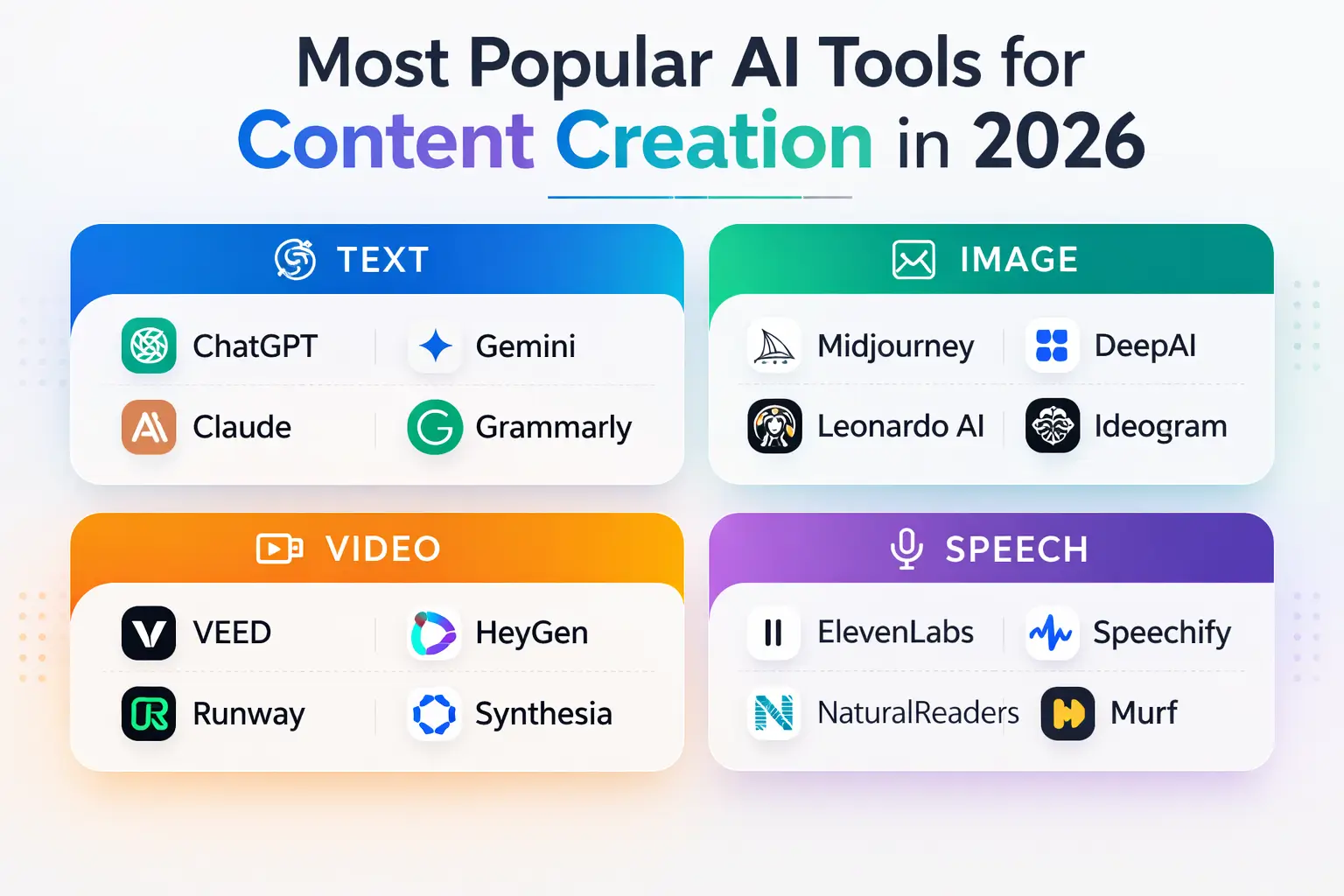
The world is full of people who are trying to to get around Google rules, guidelines and algorithms. In 2026 we see a plethora of so-called ‘SEO experts’ recommending the use of ChatGPT from OpenAI or Gemini from Google, Claude from Anthropic, Grok from X.ai, DeepSeek from China and other AI or machine learning tools to easily create content for websites.
Jasper, Wordsmith, Articoolo, Word AI or Quillbot are just a few of the dedicated writing platforms. Just give them some key words or phrases, add any prompts you like, then let them spit out hundreds or thousands of words or code - simple. Yes simple, but a minefield for you if you do not edit it sufficiently and maybe check on the source. And crucially, whilst the output from a prompt should be 'original' content in theory, it is not always factually correct. And you could get answers that are simply wrong, 'hallucinations' is the technical term for such false information. The tool is fine, in fact it is very powerful. However you do need to invest time to learn how to use it well, if you are to become your own content creator.
AI tools can help less skilled or talented creators level up with their more experienced peers. But having the experience to be able to identify what makes good content does take experience, time and talent. Many writers will not use the tools, other than to ideate or edit layouts or to speed up some simple but time consuming tasks.
In late 2026 Google updates are seeing many websites being punished because they added AI slop.

Back to the Future Content Tactics
Years ago before these bots or tools, these sorts of 'Experts' would scrape content from other people's websites, posts or articles to create me too content for their own client websites. Nowadays they are giving these tools to non native speakers and saying use ChatGPT, Gemini or Jarvis to create content. The result is streams of poor quality, uninteresting content, with no real value. It could make the dumb dumber, so be careful who you let people use it to create content on behalf of your firm. Your reputation is crucial to your success. And critical for ranking in Google results. Or in LLMs Large Language Models like ChatGPT Search.
This sort of low quality content or website was of little value way back in 2010 and is of even less interest in 2026, because Google knows how to handle all of this junk much better now. This means it will not rank well, even if initially it does rank well for a few days or weeks. As the output of content from AI gets better, Google will still look to deliver the best answer to any given question or search query. That has not changed, as it was always their stated aim. Adding lots of poor quality content to your existing website will only do damage and your rankings will tank. Google is not simply looking for content that is focused on technical optimisation for a given keyphrase. Any other search engine acts in the same way. It is looking to find the best answer based on the 'intent' of the person doing the search query. Is the intent to get information, navigate to information or do a comparison or make a purchase, as in transactional. Which part of the funnel or buying process are they at now? You may want to create content at each point of the funnel to keep your readers engaged, through to a transaction. Our mantra is 'If it is'nt worth writing yourself then it is'nt worth posting'.
Note: If you let someone create content on your behalf you are still responsible for what gets posted on your behalf. That includes website content, photos, video and social media posts.
Ignorance is no excuse in the eyes of the law or Google. Be careful how you use these tools. But by all means do use them to increase productivity and efficiency.
AI - Good or Bad?
There is nothing wrong with AI as such. This is effectively a 'tool' that will allow us ideate or create content and do things faster. Think of the AI tools as being an Assistant for you and your team. It is gender, creed, education and race neutral, anyone can use these tools - what a leveller! You do need to get to understand how to use AI in the same way as you did learn how to use a browser to access information on the internet through Netscape Navigator or Internet Explorer or Google. But you do not need a degree in Computer Science or be a developer. Your competitors are probably doing this already, so do not get left behind. It is a bit like the industrial revolution and it is that much of an innovation.
In 2026 we do not need to be developers to create code, as we can use AI tools to do much of the work. However, experienced developers will use these tools much more effectively. They know what they are doing and understand code from the inside out. Productivity can be increased under experienced supervision. Using AI to create code or vibe coding will expose you to problems in the future, when the code needs to be edited, but you do not know what to do. And Google also hates AI Slop Code too.
So that is all good. However, many content creators would say that AI is bad because it is doing their job and perhaps doing it badly.
Everybody should now be using AI to help them do their job better, but we should not rely on it to do the work correctly, so it needs the supervision of an experienced human who can spot the inaccuracies.
Big picture.
Other people worry that AI or AGI is going to replace humans in the long run. Stephen Hawking warned about this in 2014 saying it 'spelled the end of the human race'.
Sam Altman, one of two co-founders at OpenAi who created ChatGPT stated that they were concerned about how AI was being used by OpenAI users. Interim CEO Mira Murati left in September 2024 with many other key people, to create their own AI firms. Her new venture Thinking Machines Lab launched in early 2025. So it is clear that there will be wholesale abuse of AI tools in 2025 and beyond. But who will be the 'bad actors'? Murati says that AGI artificial general intelligence will be achieved before 2030. If you think that the advent of the Internet was a revolution, AGI would eclipse it by a long way. That is IF it is ever achieved. Dario Amodei at Anthropic states that we have already reached thhis point and are not prepared for it at all.
AI as such is good, rather than bad, but the ugly bit is where bad actors will use it to do bad things. And nobody really knows the real power of AI, as it is evolving so quickly, learning on top of all our combined learnings or knowledge, so we cannot know its real power. And Joe Public has no real understanding of the power of the newest versions of the Frontier Models which are only available to a select few. Meantime in China many model are made availabe to the masses, in an attempt to get ahead of the USA in this AI race.

Plan your content creation
If you want to write content for your website, it needs to be something new or fresh or different and ideally of interest to anybody who finds it. If you simply write about something that has already been written about a million times or even rehash something that has already been written somewhere else, Google will not feel your content deserves to rank. The Helpful Content update from Google basically states the Google will rank content based on how helpful it is, rather than just simply being relevant to the search query. Warning: It is a long read.
Content Indexing versus Content Ranking
Currently Google is crawling then discovering pages and not necessarily indexing these poor or repetitive posts. Or at the very least there is a much longer delay to indexing than there used to be. A big part of this is Google letting you know that your new content is of no great interest, so your posts are not ranking well. What Google would like to see is that any content that you write gets shared and ideally get good authority backlinks as well. This shows it is appreciated and has value.
Content marketing in 2026
This is going to require that you only create good quality original content and ideally create really great content if you want to turn up in AI Overviews or AI Mode. Rather than create ten blog posts or articles about a topic, why not invest the time to create one high quality article. Then go about getting people to share and link to and mention your article in other related websites. Google would really like to see you get backlinks from authority websites in your own space. Buying links is not a good idea. Yes it works for now, but less and less so going forward. Unless a link is from some high authority website and one that is related to what you do.
Content Creation in 2026
If I want to create an article on SEO as in search engine optimisation techniques then I would ideally want to be getting backlinks from other websites that are recognised to be expert or authority websites in the whole area of search engine optimisation. If I simply write ‘a n other’ article on SEO, Google will have no great interest. Therefore, even when it does eventually get indexed, it will not rank very well. Check out how Google defines Helpful Content here. The Spam Core update of October 2023 saw Google reindex many pieces of content to ensure that they are delivering the best answer to any given question or query. It caused mayhem for so many websites and their rankings in search. And rightly so. Google currently apply core updates on a monthly basis. What works well this month could be punished next month.
For creating content you can use ChatGPT or Claude or Gemini. Perhaps use them for ideation, using whichever tool you like most. Bearing in mind that they all hallucinate and give false information, you do need to edit the content before using it. Fact check it and be sure that you are happy to put your name to it. The bottom line is that the tool will create any amount of content, so you need to decide what is worth using. So you can save a lot of time in content creation, which gives you space to make the output better. Treat the tool like a lazy intern and you will not go far wrong.
What is SEO? - start here if you want more information on this huge topic. Now this is a big article and we did not use AI to write it - for better or worse, you decide.
Glossary of AI Terms
Some of the terms you hear when it comes to AI - here is a simple rough one liner about some of them.
What is AI?
At a basic level, computers can be fed with data in dataset or language models or images, so that when you ask a question or enter a prompt, it will deliver an answer based on its large language model. It produces answers based on its knowledge base. Currently, the output from Artificial Intelligence differs from Human Intelligence, as you can take information and add or improvise based on your experience. So our answer to any given question should be less robotic, more creative, intuitive, and hopefully more useful than any AI answer. However in our case we too are limited by our knowledge and experience. So a complex question could be better answered by an AI that was fed a dataset that we do not have at our disposal. So AI is the science of making computers smarter, faster, more efficient or productive. IBM describes AI as 'a technology that enables computers and machines to simulate human learning, comprehension, problem solving, decision making, creativity and autonomy'.
What is a GPT?
Chat GPT is a General Purpose Technology and also GPT is used to describe generative pre-trained transformer models that are neural network-based language prediction types that are built on the 'transformer' architecture, a machine learning framework than can encode and decode. They can take any NLP natural language queries, or prompts, and then they predict the best possible response based on their understanding of language. Many are multi modal, so we can transform the written word to audio or video. Most are not exact and will need to be refined and fact checked.
What is Agentic AI?
This is where you have an AI be somewhat autonomous, as in they can do something on their own for you. You can have your AI engage with other AIs to do things for you such as book tickets, make appointments, summarise or even answer your emails etc. As of late 2026 the jury is still out on how reliable they are, for now. But true Agent Orchestration is coming soon, where agants work or engage with other agents to get things done. On a FREE or low cost subscription you will see little in terms of agentic AI, but plenty of people on a higher subscription level are already making good use of Agents.
What is Gemini? And how does it work?
Gemini is a Google tool, a multimodal large language AI model that you can use to explore creative ideas and explain things simply. It’s a Google AI experiment that can generate text, translate languages, write different kinds of creative content and more. Gemini 4.0 now underpins Google AI search. And NotebookLM. And it includes Sora for images or Lyria for audio creation.
The simple answer
When you enter a prompt into Gemini, it replies with a response using the information it already knows or fetches from other sources, like other Google services.
The technical answer
Gemini is a large language model using LaMDA Language Model for Dialogue Applications.
The language model learns by “reading” trillions of words that help it pick up on patterns that make up language, which allows it to pick up on and reply to your questions in common language patterns
It’s always learning, which means it also learns from your prompts, responses and feedback.
It’s an experiment, and it will make mistakes.
What is Googles Gemini?
Gemini is Google's most capable and general AI model to date, announced on December 7, 2023. And 2.0 was introduced in early 2025. Then 3.0 in November 2025. Now Gemini 4 Argon as of October 2026. Getting faster and faster each time. It is a powerful multimodal model that can understand and generate text, translate languages, write different kinds of creative content, and answer your questions in an informative way. Gemini is built on Pathways, Google's new AI infrastructure, which allows it to process information more efficiently and scale to larger models. See more at https://deepmind.google/technologies/gemini/#introduction
What is a Large Language Model?
This a dataset or corpus of information, a body of knowledge as such. When fed in to a tool like ChatGPT it can then create an answer to any given question or prompt. Any answer or outout is limited by the extent of its data or knowledge from the LLM it was fed initially. These LLM used to cost a fortune, but nowadays they are getting incredibly inexpensive to create. This is why we are seeing AI tools becomiong available to the general public for small money. Or for free, in which case you are being given the tool, so that you enter the data, through questions and prompts and refining the answers you get. You are essentially working for the platform.
What is Narrow AI?
Think ChatBot or Siri or Netflix or even Google or any e-commerce platform that recommends things that it thinks you will like based on your browsing history. It usually has one single function: to deliver a suggestion based on its training. This narrow AI has been around for many years. And it is cheap to create. Nowadays, you can use AI tools to create a narrow AI, such as your own ChatBot.
What is the T or Transformer in ChatGPT?
The transformer was added in 2017 and it understands context. It can take your prompt or question and deliver an answer. Before the advent of the transformer, AI was more limited. The transformers today can vectorise text, images or sounds so that it can deliver answers in text, sound or image and video, such as Dall-E. The transformer encodes everything into numbers, essentially, so that it can then relate anything and generate output based on its understanding of context, through Neural Networks.
What is Machine Learning? - It is just that, a machine that is learning from everything we put in to it. Every time you ask a question it is learning. It further learns when you ask another question based on the answer it gave to you. It keeps learning as you keep asking until you get an answer that you deem to be correct. Once it learns from the first encounter with you, it can deliver the best answer quicker. And if people ask more questions based on that answer it learns even more.
What is Deep Learning? -
This is a more evolved or evolving variation on machine learning as it uses more layers to determine an answer to a given question.
What is a Neural Network? -
This is where a comouter is trained to think like a human brain. It breaks down layers of processes through neurons or nodes to determine an answer to any given question.
What is AGI?
Artificial General Intelligence is the concept that AI becomes better and faster than human intelligence. Could it happen, should it happen, has it happened, this is all conjecture and above my pay grade. Certainly it is way off topic for a simple post about using basic AI for content creation in websites. If you want to dig deeper, do a search for Mustafa Suleyman at Microsoft AI and previously founder at DeepMind and at Inflection. Maybe watch his interview with Steven Bartlett HERE to get a feel for how he sees things going.
For most people this is enough to give you an idea of how AI can generate content, in text, audio, video or photographic mediums. The Generative AI can generate original text or image based on your prompt. It is a transformer to that output should be 'original', in the sense that it is unique, but it pulls from data that it was fed, hence it is generative.
Hungry for more information about AI in general?
Try listening to Paul Roetzer and Mike Kaput at The AI Marketing Institute podcast. This is fantastic weekly podcast. And these guys also offer training at any level for the C Suite. Or read their book Marketing Artificial Intelligence: AI, Marketing, and the Future of Business.
Books on the topic of AI
- Nexus by Yuval Harari
- The Coming Wave by Mustafa Suleyman
- The Singularity is Nearer by Ray Kurzweil
- AI 2041 and AI Superpowers by Kai-Fu Lee
- Prediction Machines by Ajay Agrawal
- Life 3.0 by Max Tegmark
- Superintelligence by Nick Bostrom
- The Alignment Problem and Algorithms to Live By by Brian Christian
Or just ask ChatGPT or Gemini a few questions. Ask good questions, get good answers. Use plenty of words and explain context in detail what you want to know. Only by practising will you become comfortable with these platforms, then you will start talking to them as if you had a team of mentors or professional advisers.
🌊 AI-generated image 😉