‘Content Marketing is a marketing strategy, to create and promote useful, relevant content to attract a specific audience‘.
To this question, you can get many answers, but content marketing is basically nothing new, just the consistent publication of useful information to generate ideal sales or leads. Something, preferably shareable, to engage, entertain or educate. People have done it for years, in older formats such as print, video or audio mediums, but generally in just one outbound direction.
The days of shouting out your message to get it seen or heard, are being replaced with the opportunity to have a two way conversation, or more than two way, if you are good at it. You can encourage your potential customers to tell you exactly what they want or which questions they want answered by using the right content marketing strategy. John Jantsch and Ivan Misners definition of marketing is something like “getting someone who has a need, to know, like, and trust you”. We want to do that with content.
Content Quality

Useful content, well presented, can show competence on your part and a desire to help inform your audience, to create Authority and build a brand by consistently publishing.
Some suggested rules include writing for the reader, good story telling and persistent promotion. This is very much a Marketing function rather than a Sales function and one that should be guided by the requirements of the audience. What do they want to read or hear about? Find out – Ask them? Deliver the resulting content as Text, as Audio and as Video content. Keep it simple rather than complex or technical. Do not depend on AI, create something original and of value to your ideal audience.
Use it on your website, in Forums, on Linkedin or YouTube, in Blogs, Podcasts and Webinars. Find out where your audience searches for the answers you have to offer – then repurpose your content or deliver the answers in the relevant format.
SEO – This ‘content marketing’ is now a key part of search engine optimisation as Google will no longer allow people or digital marketers dictate the keyword or key term for a page, if they do not back it up with good useful engaging relevant content. This helps business owners as they no longer need to depend on digital marketing techniques that they did not really understand. Paying some company a set fee to ensure you are optimised for your key words or terms is no longer the only option. Now you can use your website and overall web presence to show people what you do and why you are good at it. Google Ai mode and Search GPT will use your content to answer questions, if it is good enough.
Tip: Create a Library of useful content on your website, curate it, improve it, asking for suggestions as you go. By asking for suggestions, you will get the questions from your audience about what they want. Then you get the opportunity to give it to them. They are not coming to your site to buy anything, they are seeking the answer to a question, doing some research or looking for options. If you can answer it well, then what you have to offer may become of interest to the reader.
But focus on answering the question and offering FREE no obligation “Tips” or guides. Do not plaster the content with “Special Offers” or “Buy Now” or “Only 12 hours left” sales messages. Offer links to other useful information, other guides, tips or free sheets. On each page, do have one or two simple discreet Opt In buttons, to a service or product or shop, but they should be there if required, rather than being a focus on the page. No big forms looking for Personal details, no “In your Face” popups, no screaming sales tools. John Deere have done this for generations in every medium known and they have a great Community of followers, who know the products do as advertised and the potential buyer knows long before visiting a showroom what each product can do, which problems they solve. And how they operate, along with Tips on how to get the best from the product, why it is better than the competition and how it makes sense to own it.
Structure of Content on page: Treat every page as a landing page, with a title, sub title, short explanation of what you are about to offer, an image or some pertinent graphics and a clear call to action, as in what you want the reader to do next.
Using AI content
Google does not care if you use ChatGPT or any form of AI. What they care about is delivering the best answer to any given search term. However, a lack of originality or the use of generic, irrelevant or useless content, will ensure that your content does not rank well. Even it ranked, poor content will not keep the readers on your page.
Title – What are you offering here. ‘Get more customers fast‘. Explain it in a way the clients understands, no technical jargon.
Sub Title – How will you deliver the product, service or information. ‘Rank well in Google with our SEO service – results guaranteed ‘.
Image – Adding graphic for people to understand the page better. A picture paints a thousand words
Proof – Add testimonials, Google reviews, case studies, video reviews, anything that backs up what you are saying with client or social proof
CTA – Call to Action, what do you want the reader to do next? Read more on the topic, buy the product, subscribe to the service, read another page, whatever.
If you get all this in above the fold or top half of the page, you can expect the reader to scroll further down the page, paragraph by paragraph. Here you can answer questions, show a portfolio, add client video testimonials etc. Some readers will want to read more than others, so make sure the page answers all logical questions. Your page should lead the visitor to a point where they click on your CTA call to action again, so make it available and make it enticing, so that they know what to do next ‘Claim Your Complimentary SEO Audit’ or ‘Talk with our SEO geeks now’ etc
Publish: After you create this high quality content for your website, work on the various platforms for dissemination, rather than the other way around. In some cases, you may want to talk to multiple personas in order to make one sale. If you are selling family cars, you may want to talk performance to a male buyer and safety to a female buyer, logistics or specifications to one and comfort or styling to another. You may end up creating content clusters to address multiple buyer personas.
When a family decides to buy one car, they are really buying two or more. Each participant in the buying process of the car will select a model for their own reasons. Audi recently promoted to women drivers by discussing how well they drive in general, because they could see that 80% of car purchases are influenced by women.
Sharing – Content delivery channels – Share your content in Social, in Linkedin and Instagram, Twitter and Facebook, but look to get found because you are creating the best content. It is more important than where you rank in Google for your profession. Your actual website site could be appearing on Page 10 which is no fun, but if you get the Content Marketing right you will get found for specific relevant articles, if they are good enough. Content is now more important than SEO or Link Building or Optimised MetaData, Keywords or registering with search engines or portals. Adblockers will mean that it is becoming harder to get seen through paid search, so good content is vital. And AI search will pull answers from your website to answer search queries without bringin the reader to your actual website.
Content is King – Long live the King !
This is good news, so lap it up and get started with a Content Marketing strategy. Talk to us if you need advice.
Remember: The 5 C’s of Content Writing
- Credible – In a low trust world, you want to look real, so maybe get some articles published in Magazines or Online Forums of note
- Clear – use short sentences and paragraphs and bullet points, no big words or long sentences.
- Concise – use as few words as possible and then look to reduce that too
- Compelling – It has to be of interest to the reader not necessarily to the writer
- Conversational – Talk as if you are chatting with a friend, make it you and make it real. People who like you will like what you write, your style, personality and tone. No, not everyone will like it, but you do not need everyone.
Create a steering document – Plan the work and work the plan!
Develop a Content Marketing plan, get intentional about content, be a plotter rather than a hamster, have a plan to develop and publicise your content that is relevant, informative, entertaining and worth the read. Deliver it via the right channel, to the right target market, at the right time, in the right format, be it mobile, audio, video, charts or a combination. Have your buyer personas, work out why they might buy and create convincing content. Start with the end in mind. Ensure alignment throughout your organisation, so that the messaging is the same in all communications channels. Plan the delivery, use Hootsuite, be consistent.
Facebook and Twitter, Instagram and LinkedIn are ‘Paid Channels‘, whereas your website is an ‘Owned Channel‘, so create all your content for your ‘Home Base website first and radiate it out from there.
Do an Inventory of your existing content, break it down and then deliver it, remarketing or repurposing it as you go. One good ebook could become 100 Blog articles and 1000 tweets, being used in multi channel campaigns. We want content for every part of the sales funnel:
1. Awareness – to help make people aware of the subject or to become ‘problem aware’.
2. Consideration – the phase where people look for solutions and potential vendor partners.
3. Decision – When people have chosen us as the vendor of choice and want assurance or instruction to make a purchase.
For each phase the content will be different, so plan and write with this in mind. Content may be generated by outsourced partners, but for most companies, the best content is or can be created inhouse, by people who know about the business, product or service.
Mobile content marketing – the challenge
Content can be participative or crowdsourced, in that you can create useful content with suppliers or partners that will be attractive to your customers, maybe even create good ‘Fat’ content. But, bear in mind that more and more content is being consumed on a mobile or tablet, so how you break it up for delivery is important. Work from the mobile view back, so create content that delivers on a phone first rather than on a website first, then for mobile – reverse the priority, as mobile is no longer playing second fiddle. Mobile Menu structure is crucial. When designing a site, start with a Graphic Mockup for Mobile, Tablet, laptop or PC and a layout or wireframe for content and menu structure.
CCPL – Content Cost Per Lead
CCPL will evolve to measure the success of specific content in delivering leads so that a budget can be made available for the Chief Content Officer and the team of Content Creators, who will become more consumer centric rather than just creating more advertising. It is time to engage, by being real, open, engaging and honest. Measuring the success of Content Marketing is a must. Content consumers could be either potential customers or potential investors, employees or suppliers. Small companies can create great stories that consumers and brand ambassadors will lap up, then demand more of the same, especially hyper local content, which can rank higher than mass market content by global brands.
“Buyers have changed the way they buy, so sellers must change the way they sell.” Michael MacGinty 2010 – this still applies, so, any good well presented content can help buyers find what they want, answer their queries, thus helping them make the buying decision or offer feedback if they are not convinced.
Some useful tools
Answer the Public helps find useful trending terms in Social Insights
Social Crawlytics find influencers – Social metrics
Try ChatGPT or Google Geminis Nano Banana for simple images in seconds – ideal for social.
BuzzSumo – Find out which content works on your site and others
Semantic Web
Semantic web and data sharing means that the walls will come down and Google will start seeing app content and social media, which is important because so many people are searching via apps or social media platforms on their smartphone. This is a challenge for Google, so they need to offer results from apps and any other source of data. However the semantic side of things is a big target for Google. They want to be able to optimise around a searchers intent and for context and focus on ‘entities’ rather than just keywords or terms. An entity could be a person or organisation, such as Micheál Martin, Leo Varadkar or Prime Minister, Taoiseach or Government. Context could be around a question like ‘How do i contact Micheál Martin‘ or Where is the Taoiseach’s residence’.
Intent could be Informational such as where does the Prime Minister of England live or Investigative for possible commercial intent, such as who offers tours of Dublin that includes a visit to Leinster House.
Transactional as in actually looking to pay for the tour and lastly Navigational, where do I go to make a transaction to pay for the chosen tour.
Be warned, Google will get better at stopping SEOs from optimising using just keywords or AI generated text and insist on a qualifying page having good ‘authoritative’ links or original content or both. This evolution in search is critical to the success of Google. And it will help ensure that results in search are better. It all makes sense for Google in the race against ChatGPT, Perplexity, Grok etc and is better for the person doing the search. The challenge is for the website owner to ensure that the content is good and relevant. It is a good opportunity for people who manage their website well, keep the content fresh and avoid any ‘Black Hat’ techniques, or generic AI generated content.
Plagiarism – Do not be a copycat
 Many websites contain text that was copied from another website. This is plagiarism and Google recognises this copied content. As a result the website with the copied content will fall down the rankings or cease to be indexed for important key terms. If you want to check your copy, simply copy a line of the suspicious text and put it in Google search, using double “quotes” to indicate that you are searching for this “exact line” of text. Using AI tolls like ChatGPT makes it easier to create ‘content’, but that does not make it useful. Check this AI content to see if it rates as plagiarised.
There are loads of FREE checker apps and sites, but avoid these honey pots as they will force loads of useless adverts in your face. Use Google itself to do your search.
Be careful who is allowed to add content to your website, because if someone adds copied content, your business will suffer. The same goes for images, if you use someones image, add a link and credit to that person. Having a student or digital marketer adding content can damage your wealth, so be aware of who is adding what. As a general rule, if you have not created the content, then it is not yours. This image is from Pinterest
Duplicate content
If the content is copied from another site, then it may be plagiarised, but within your own site you may have content that is duplicated, which is fine. Google can see this as a way to manipulate or fool its bots, so you may be punished if you are deemed to be doing it. Having some of your own original content appear more than once on your own site, will not cause an issue, if it makes sense on each individual page. Over use of key words or terms may be deemed as being duplicate content, so make good use of synonyms. For example, web design could also be website design or website designing or webpage creation etc. If you do have to use excerpts of someone elses content, you can make these pages ‘no follow’ or let Google know this is not your content, perhaps add it as a print only document a downloadable pdf. Get your Digital Marketer to set this up for you. In Google’s own words,” if your site contains multiple pages with largely identical content, there are a number of ways you can indicate your preferred URL to Google. (This is called “canonicalization”.) More information about canonicalization from Google.
Suggested reading
What is Content Marketing as defined by the Content Marketing Institute in this article here.
A Guide to Content Marketing by Neil Patel who has built a veritable content fortress, which his team curates continually.
What is Content Marketing and why does it matter by Search Engine Journal.
How to write great copy for your business, any topic by Jackie Edwards
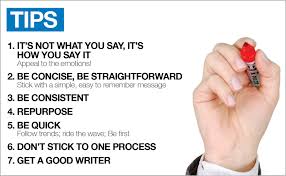 Do you know how much time users typically spend on your web pages? If the average time spent on a page isn’t more than a few seconds, you need to start working on developing better copy.
Learning to write engaging copy will result in a better awareness of what you offer. You will be able to connect with your audience, drive more traffic via backlinks, and eventually generate more leads or sales.
What makes great copy?
Great copy is something that should keep you reading from start to finish. It should get a clear message across, and readers should still get this message if they end up skimming through your content.
There are a number of methods you can use to make your content easier to scan for Internet users. You could break it down with subheadings, use bullet points or numbered lists, write with short sentences, and use images.
Writing copy for the Internet is not the same thing as writing a book. There is no need to use long flowery language to get your point across.
How to write great copy
Start by getting to know your target audience. What are the topics your readers want to find out about? What kind of voice and tone are appealing to them? You should then define what will make your copy valuable. A page or blog post can deliver value by helping a reader make a decision, entertain them, or teach them something.
You can learn to write great copy by looking at examples of what you would like to achieve. You should start collecting pieces of writing that you feel are close to what you want to create. Keep them in a folder and go over them regularly. Pay attention to the techniques used by writers to organize their content, get their readers hooked, and get their point across.
Delivering value to your readers
Do some quality research before you start writing. A good piece of copy should really add something to the discussion. If everything you have to say has already been published, you probably need a different topic.
If you aren’t sure what to talk about, put yourself in your readers’ shoes. Ask yourself which problems they are trying to solve by reading your content.
It is possible to write quality copy on any topic, even if you aren’t a professional writer. Take some time to familiarise yourself with your topic, remember that you are writing for an audience with a short attention span, and make sure your copy is valuable to the readers.
How to generate the leads you really want from your website
There are two parts to this. One is generating the right visitor traffic to your website. And two is converting those visitors to potential customers, who engage with you.
One. Generating the right visitor traffic to your website
To generate the right traffic you can do a number of things and here are some of those.
1. Advertising using paid PPC Pay Per Click Google Adwords to get found when someone searches for specific keywords or terms. This is one to many, but to people who show some intent
2. Advertise in paid Social Media platforms like Facebook, Instagram, Twitter etc. Does you target audience hang out in any of these platforms. Work out which platform and start testing with whichever one seems like the most likely fit for your desired audience -This is still one to many, but it is more focused
3. Advertise in paid offline mediums such as newspaper and magazines or any printed media, TV or Radio or signage and van livery etc. This also one to many.
4. Create content on your website that is useful, relevant and adds value, so that you rank well and get engagement. These good pages will be ranked well by Google and because of the ensuing engagement, they will rank even better.
5. Post engaging, educational or entertaining content in your chosen Social Media channels. It could be a photo or video, an article or link, a graphic or meme
Two. And two is converting those visitors to potential customers, who engage with you. This can be done in a number of ways
 1. Create engaging content that answers questions, adds value for the visitor and is easy to read and understand
2. Offer FREE Guides that are of value
3. Add good CTAs Calls to Action to get visitors to contact you with a question or to get a quote etc
4. Show a portfolio of past work or projects and show case studies
5. Add testimonials for Social Validation and perhaps have Trust Pilot or Google Reviews
6. Run a competition to get engagement
7. Offer incentives or promotions online and measure results
This is ‘how to generate the leads you really want from your website’ and get the enquiries that you really really want. It is an ever evolving task of staying topical, being present in the right places, at the right time and learning how to engage with your audience.
If you do not have the time or skills to do it, talk to us abbout our Outsourced Webmaster service and leave it to us to use the tools to drive good business to you.
Influencer marketing – What is it?
Celebrity endorsement
Simply put, if someone can influence a purchase decision, then that influence is of value to the creator of the product or service. That person of influence could be a politician or a performer, a rapper or a writer, a fashion blogger or a drummer, a cyclist or a chef. Some of these people are open to promoting products they like. Some will take payment for promoting the product or service. There is nothing new about Brand endorsements by celebrities. Many Brands will pay these influencers to promote their products. Usually, a figure is agreed based on the number of followers an Influencer has. For example, Nike could offer a sports person with 1,000,000 followers one €uro or one dollar per person, if they promote the brand during a summer.
The difference with Influencers.
 What is different, is that there are hundreds of thousands of ‘Influencers’ who are not big time celebrities in sports or on screen, but they have an audience over which they have an influence. A twenty something female fashion blogger in Paris with 200,000 followers on Instagram and/or Facebook could influence sales of a brand, especially a small chic brand. How much is it worth for that promotion? Is it worth one euro per follower to have that influencer wear your brand and promote it? Can that increase sales? Is it to be a post every day, week, month or year? How will you measure the success of the promotion? Based on numbers alone, there is scope for miscalculation. Many ‘Influencers’ used to buy followers. Nowadays they can game the system to get likes or follows, so the number is less important. It is more important to use better metrics to measure value.
Small is better than big?
That niche Parisien influencer could do more for a small French cosmetics firm than Courtney Cox or Beyonce could do for them. An influencer could be as local as a Dublin based Cook, who recommends her favourite vegetarian restaurants in the city. This is tantamount to Word of Mouth Marketing. You pay the influencer for sending or referring business to you. The good news is that you can measure the return on your spend and it is hyper specific marketing. If someone builds up their good name and gets the trust of followers, over whom they have an influence, then that influence has a value. You can leverage that value for your product or service, by paying a fee or commission to the influencer. Sounds fair.
Content for Influencers
You may be able to find influencers who can increase your sales, so they become an ideal advertising medium for you. As publishers of content, you still want them to stay oon brand. So do create content with or for them, to allow them to share content within your brand guidelines. If you create content that an influencer can use, you save them the trouble of having to create it. And you get to use the content that you choose. So, content is still king, even when posted by someone else.